
HEMP
South Dakota’s THCA Loophole Beat Licensed Cannabis Shops
Alan Welsh left the South Dakota Highway Patrol and now grows medical cannabis. He is still asking why THCA hemp flower sits on shelves while nearly 1,800 people took felony charges for marijuana edibles and vapes.

Alan Welsh spent 28 years with the South Dakota Highway Patrol and now grows medical cannabis, and he still cannot get the state to police THCA hemp flower that becomes delta-9 THC when it burns. The Unified Judicial System tally published with his complaint on July 1, 2024 showed 39 people charged under the smokable-hemp statute and nearly 1,800 felony cases for marijuana edibles or vapes since 2019.
Licensed shops need a medical card, cameras, and lab tests. Hemp counters need a label. That split, not the career change, is the fight.
Alan Welsh Now Grows What He Once Seized
Welsh was not a quiet trooper. From 2014 through his 2017 retirement he ran the Highway Patrol’s Sioux Falls region, and in 2012 he was the cop on a saturation patrol that took in 295 pounds of marijuana. The Legislature later commemorated the career. Then he went to work for a friend.
Darcy Johnson, who owns a North Dakota trucking firm that services oil and gas jobs, hired Welsh to run security and later asked him about cannabis as South Dakota voters moved toward a medical program. Welsh said no, then started reading. His conversion was a public-safety comparison with alcohol, which his talking-points sheet said kills tens of thousands of people a year, while he argued marijuana’s reputation was overblown.
On June 20, 2024, he walked a Dakota Herb grow building in Tea and looked at clear bags of dried flower waiting to become edibles and vapes. “When I was in law enforcement, I’d have gone crazy seeing this,” he said. He is a partner in the company, which advertises state-licensed growers and indoor-cured flower at shops in Brandon, Huron, Vermillion, and Aberdeen, sold only to South Dakota medical cardholders. The state medical cannabis establishments list also records a Dakota Herb LLC manufacturing license in Sioux Falls.
Kittrick Jeffries, CEO of Puffy’s Dispensary, put the business problem in one line: licensed operators are competing with shops that do not need a medical license. Welsh was blunter. He has said that cannabis sold outside a dispensary is illegal distribution of marijuana.
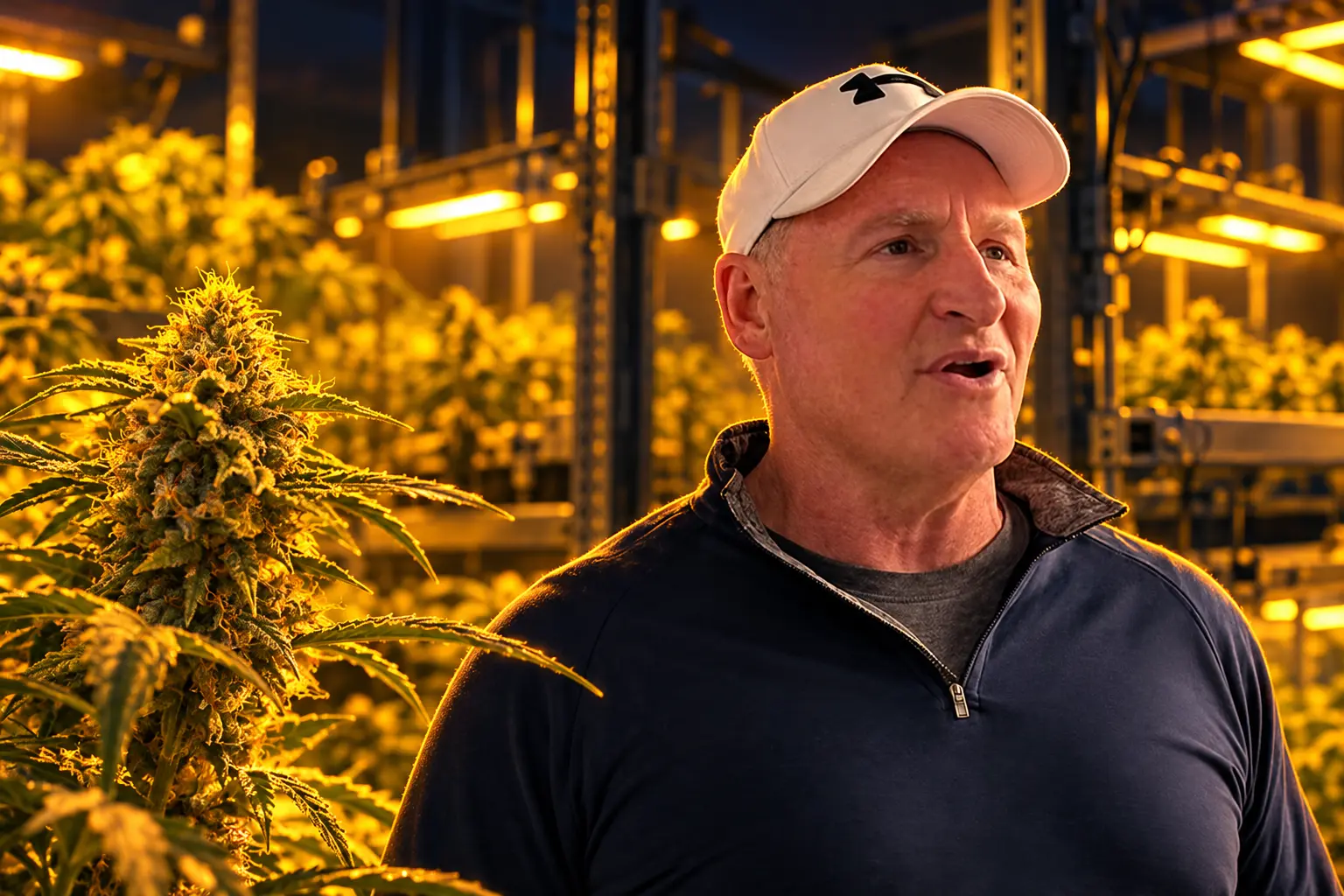
THCA Flower Becomes Delta-9 When It Burns
The 2018 farm bill pulled hemp out of the federal marijuana definition if the plant, or anything made from it, holds no more than 0.3 percent delta-9 THC by dry weight. That number measures delta-9 already present. It does not, on its face, count THCA, the acidic form that sits in raw flower.
Heat finishes the job. Smoke a joint, hit a vape, or cook the flower, and THCA loses a carboxyl group and becomes delta-9 THC, the compound that produces a marijuana high. Welsh’s metaphor was a bottle with the cap still on.
It’s like me saying, ‘Here’s a bottle of vodka, but it’s not really vodka until you take the cap off and take a drink.
Alan Welsh, partner, Dakota Herb
Joe Stavig, Dakota Herb’s chief financial officer, said most of the high from cannabis comes from unlocking THCA with temperature, because the unburned plant holds more of that acid than it holds ready-made delta-9. By that measuring stick, a lot of the company’s own crop could pass a delta-9-only hemp test. “All we’d have to do is cut the tags off,” Stavig said. “Cut off the tags, make a million dollars.” They say they will not.
THCA IN PLAIN TERMS
- The acid: Tetrahydrocannabinolic acid is the raw, non-intoxicating form of THC in fresh cannabis.
- The heat step: Burning, vaping, or cooking converts THCA into delta-9 THC, the intoxicating compound.
- The paper test: A delta-9-only dry-weight limit can treat high-THCA flower as hemp until someone lights it.
In May 2024, Terrence Boos, chief of the DEA’s drug and chemical evaluation section, wrote that Congress required hemp to be tested with post-decarboxylation or similarly reliable methods, so the delta-9 figure has to account for THCA. After that conversion, he wrote, cannabis-derived THCA does not meet the hemp definition because it is equivalent to delta-9 THC. Minnesota’s cannabis office began using that reading. South Dakota did not make it a statewide retail rule.
The State Charged 39 People for Smokable Hemp
Welsh’s second complaint is not chemistry. South Dakota already bars smokable hemp, and that statute never mentions THC by weight. If the product is meant to be smoked, selling it or using it breaks the rule. A violation is a Class 1 misdemeanor, the same class as marijuana-flower possession. Possession of marijuana edibles or vapes is a felony.
The Unified Judicial System count that accompanied Welsh’s July 1, 2024 complaint showed 39 people charged under the smokable-hemp statute since it passed. In the same window, nearly 1,800 people were charged with felonies for marijuana edibles or vapes since 2019. Smoke-shop owners who fought House Bill 1125 had told lawmakers that hundreds of businesses would feel that bill. There were more hemp storefronts, Welsh argued, than people charged for smoking what those stores sold.
THE JULY 2024 CHARGING SPLIT
| Product | Penalty class | Who can buy it | Charges cited July 1, 2024 |
|---|---|---|---|
| Smokable industrial hemp | Class 1 misdemeanor | No medical card | 39 people, UJS, since the 2020 statute |
| Marijuana edibles or vapes | Felony | Unlicensed possession | Nearly 1,800 people since 2019 |
| Licensed medical flower, edibles, vapes | Legal with a card | Medical cardholders | Tracked seed to sale |
Welsh took that gap to the Sioux Falls Police Department, the Attorney General’s Office, and the Department of Health. The answers, as he heard them, came back to testing. He does not buy that for the smoke ban. A trooper does not need a lab to see a pre-roll sold as hemp.
House Bill 1125 Left the Flower Untouched
The 2020 hemp chapter already tried to stop the inhaleable aisle. Codified Law 38-35-21 says the sale or use of industrial hemp for smoking or inhaling is prohibited, and it has been on the books since March 27, 2020. Lawmakers then spent the 2024 session on a different hole: hemp CBD cooked into other intoxicating isomers.
The governor signed House Bill 1125 on March 26, 2024. It took effect July 1, 2024 as Session Law Chapter 129. The new crime is a Class 2 misdemeanor. No person may chemically modify industrial hemp, or run a process that turns cannabidiol into delta-8, delta-9, delta-10, or another THC isomer, analog, or derivative, and no one may sell hemp products that hold those converted cannabinoids.
The same bill rewrote the definition of an industrial hemp product so it excludes chemically derived cannabinoids from hemp products, naming delta-8 THC, delta-10 THC, THC-O, HHC, and THCP. THCA is not on that list. It is a compound the plant already makes. The statute still defines hemp by a total delta-9 THC cap of three-tenths of one percent, not by THCA.
WHAT EACH RULE ACTUALLY COVERS
- The 2018 farm bill: Hemp is cannabis at or under 0.3 percent delta-9 THC by dry weight, and that crop is not federal marijuana.
- The 2020 smoke ban: Selling or using industrial hemp for smoking or inhaling is a Class 1 misdemeanor, with no THC number in the sentence.
- The 2024 conversion ban: Making or selling chemically converted hemp cannabinoids is a Class 2 misdemeanor, and THCA flower is not named.
- The medical program: Patients with cards buy tested, camera-tracked cannabis from licensed shops and growers.
Officials told the 2024 original that testing products for the new conversion ban would be expensive and slow. That delay is how delta-8 gummies and THCA jars occupied the same towns as dispensaries that cannot sell to anyone off the street.
Dakota Herb Pays for Tags the Hemp Counter Skips
Welsh’s cost list is specific. At an August 20, 2024 meeting of the Medical Marijuana Oversight Committee, he said the company spends $600 a week on metric tags so every plant can be followed, and $1,000 to test each batch. The state can open the camera system and the registers. “They see what we sold,” he said of licensed rooms. “These other places aren’t doing any of that.”
Brian Mueller, then Pennington County sheriff and a member of the oversight board, did not dismiss the leak into vape shops. He wanted more testing capacity in the state before deputies seized a pile of product and waited on a lab. That is the practical objection Welsh keeps hearing, and it is also how an unlicensed aisle stays open while a licensed grower pays for tags by the week.
Patients feel it as a price and ID problem. A medical card takes an application, a qualifying condition, and a wait. A THCA jar at a smoke shop does not. Licensed operators cut retail prices to keep the medical program moving, Welsh told the committee, because the other counter was already cheaper and faster.
Rapid City Files Rare Smoking-Hemp Cases
The 39-charge snapshot is a July 2024 figure. It is not the last word in every county. The Pennington County State’s Attorney’s Office, working with Rapid City police and the sheriff’s office, ran compliance buys at smoke shops, sent products to a lab, and found THC above what state law allows on items labeled as hemp.
Notice letters went to retailers, including a June 10, 2025 letter telling shops it was their job to pull illegal stock. The office then charged the owners of Smoke Solutions and Chasing Clouds in Rapid City with violating 38-35-21, the smoking-hemp statute, over pre-rolled hemp products. That is the law Welsh said needed no lab at all, used here after testing.
Statewide, the bigger 2026 hemp fight never got a Senate debate. On January 24, 2026, cannabis policy writer Tom Angell wrote that the South Dakota Senate voted against taking up bills to ban intoxicating hemp and kratom products that had left committee without a recommendation. Pierre had a chance to fold THCA-style goods into the medical channel and did not take the floor.
Local charging and a dead Senate file can sit next to each other. A few Rapid City shops got a case number. The uncarded aisle as a business model did not close.
Federal Law Starts Counting THCA in December
Congress did what the 2024 conversion ban did not. The FY2026 Agriculture appropriations law, P.L. 119-37, enacted November 12, 2025, rewrites the statutory hemp definition so the cap is a total THC concentration including tetrahydrocannabinolic acid of not more than 0.3 percent on a dry weight basis. The same rewrite excludes finished hemp cannabinoid products with more than 0.4 milligrams combined total THC, and similar cannabinoids, per container, and it kicks out cannabinoids the plant cannot make or that were built outside the plant.
A continuing resolution, P.L. 119-103, signed September 2, 2026, split the calendar. Cannabinoids “not capable of being naturally produced” by the plant fall out of the hemp definition on November 12, 2026, and those goods are treated as marijuana under the Controlled Substances Act. The total-THC test, the THCA inclusion, and the 0.4 milligram cap bind on December 11, 2026. The Congressional Research Service noted that as of September 28, 2026, the Food and Drug Administration still had not published the cannabinoid lists the 2025 law required within 90 days of enactment.
THE DATES THAT CLOSED THE LOOPHOLE
- December 20, 2018: The farm bill defines hemp at 0.3 percent delta-9 THC by dry weight and removes that crop from the federal marijuana definition.
- March 27, 2020: South Dakota makes it a Class 1 misdemeanor to sell or use industrial hemp for smoking or inhaling.
- July 1, 2024: House Bill 1125 takes effect, banning chemically converted hemp cannabinoids as a Class 2 misdemeanor and leaving THCA unnamed.
- July 1, 2024: Welsh’s UJS snapshot lands: 39 smokable-hemp charges, nearly 1,800 felony edible or vape cases since 2019.
- November 12, 2025: P.L. 119-37 redefines hemp as total THC, THCA included, with a one-year fuse.
- January 24, 2026: The state Senate votes against taking up intoxicating-hemp and kratom bans.
- September 2, 2026: P.L. 119-103 moves the total-THC test and the 0.4 milligram cap to December 11, 2026, and leaves the November 12, 2026 date on fully synthetic cannabinoids.
High-THCA flower that passed a delta-9-only ticket will not pass a total-THC ticket. Licensed medical rooms already live under that kind of math, because their labels count what the patient will actually feel. Hemp jars that sold the precursor are the inventory the new federal line wipes out.
Welsh’s cop line is the one he cannot get answered in Pierre. “When I was in law enforcement, we always said, ‘We don’t make the laws, we just enforce them,’” he said. “So why aren’t they enforcing the law?” He asked the police, the attorney general’s staff, and health regulators, and he said he still did not have a straight reply. “I’m asking a simple question of all these people, and I can’t get one simple answer.”
December 11, 2026 is when federal hemp law starts counting the acid in the jar. Until then, South Dakota still has a medical counter with cameras and a hemp counter that spent years selling the same plant under a different name.
Disclaimer: This article is news reporting and analysis of South Dakota hemp and medical cannabis statutes, charging figures, and federal hemp definitions. It is informational only and is not legal advice, medical advice, or a guide to buying, selling, possessing, or using cannabis or hemp products. Readers who need advice on a charge, a license, a product, or a health decision should consult a South Dakota-licensed attorney, a qualified clinician, or the Department of Health and Department of Agriculture offices that administer these programs. Charge counts, license lists, and effective dates reflect the statutes, the Unified Judicial System snapshot published with the July 1, 2024 complaint, later local charging announcements, and Congressional Research Service summaries of P.L. 119-37 and P.L. 119-103, and those figures and deadlines can change as courts, agencies, and Congress act.

The Justice Department Told Marijuana Testers They Lack Standing

The DEA Hearing Left Adult-Use Cannabis on Schedule I

Two Republicans Ask Treasury to Keep the Marijuana Tax Penalty

The Cannabis Banking Bill Sits Idle in Tim Scott’s Committee

Indiana’s Two-Ounce Marijuana Bill Died Without a Hearing
The Cannabis Banking Bill Sits Idle in Tim Scott’s Committee

Vermont Stripped Psilocybin Legalization and Still Has No Therapy Program

New Brunswick’s Cannabis Crackdown Stops at the Reserve Line
The Justice Department Told Marijuana Testers They Lack Standing

White House Drug Office Puts Lev Back on Medical Policy
-
 LAW6 months ago
The Cannabis Banking Bill Sits Idle in Tim Scott’s Committee
-
 LAW3 years ago
Vermont Stripped Psilocybin Legalization and Still Has No Therapy Program
-
 LAW3 years ago
New Brunswick’s Cannabis Crackdown Stops at the Reserve Line
-
 LAW4 months ago
The Justice Department Told Marijuana Testers They Lack Standing
-
 MARIJUANA1 year ago
White House Drug Office Puts Lev Back on Medical Policy
-

 CANNABIS3 years ago
Cann Group’s $15 Million Obsidian Facility Ended in a Buyout
-
 MARIJUANA4 months ago
The DEA Hearing Left Adult-Use Cannabis on Schedule I
-
 MARIJUANA1 year ago
DeSantis Used a Cannabis Vote to Lock In Florida’s CFO