
CANNABIS
Island Pezi Turned a Welch Shop Into Statewide Supply
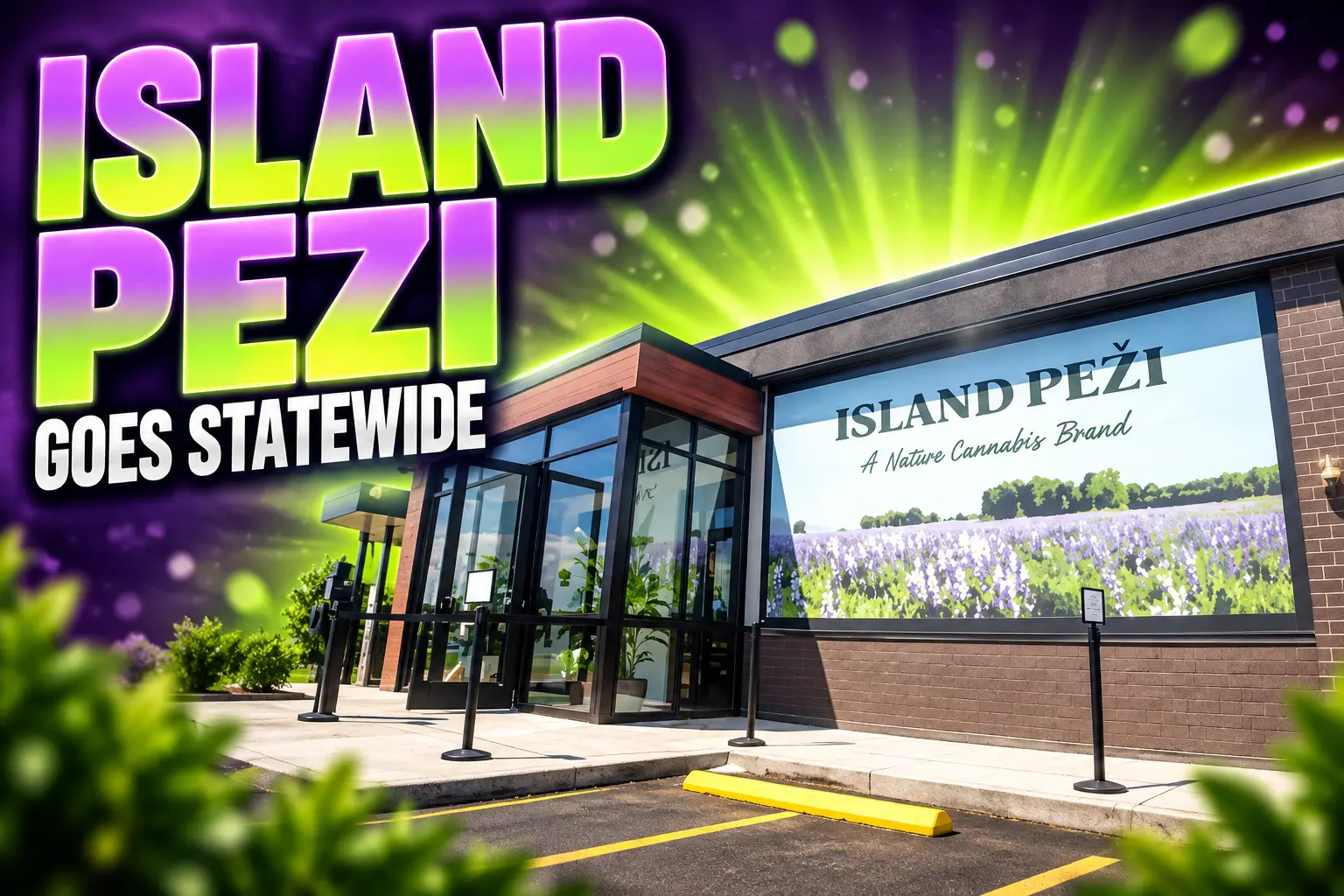
Island Pezi began as a Welch shop on White Earth flower. Prairie Island’s compact now allows eight off-island stores and statewide wholesale.

Prairie Island Indian Community opened Island Pezi on June 24, 2024, Minnesota’s fourth cannabis dispensary and the first within an hour of the Twin Cities.
The Dakota-owned shop in Welch did not grow its own flower. It bought cannabis from White Earth Nation, then spent two years adding a grow, a wholesale desk, and a route off the reservation.
Island Pezi Opened Without Its Own Grow
Island Pezi (Peži, pronounced pay-ZHEE) takes its name from the Dakota word for grass. Blake Johnson, president of Prairie Island CBH Inc., said the community picked it after a local naming round, pairing Pezi with Island because of Prairie Island and Treasure Island Resort and Casino next door.
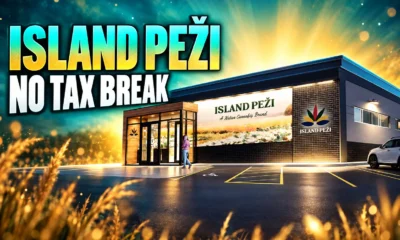
The store sits at 6030 Sturgeon Lake Road, beside Dakota Station and across from the casino. Soft sales started Monday, June 24, 2024, with a Saturday grand opening on June 29 that drew hundreds of people into line. Flower, pre-rolls, vaporizers, and edibles went on the shelves. Johnson said the shop employed about three dozen people, including a couple of tribal members who had never held a job.
Prairie Island had no crop of its own yet. White Earth Nation’s Waabigwan Mashkiki, which opened in August 2023 in west-central Minnesota, supplied the flower. Johnson framed that buy as older tribal trade, not a stopgap he wanted to hide.
Long time ago, tribes used to have intertribal agreements to trade goods. It helps support each other and be able to move in a way that is good for everybody.
Blake Johnson, president of Prairie Island CBH Inc.
Kim Campbell, treasurer of Prairie Island CBH, later said the Welch counter was profitable from day one even while it leaned on that pipeline. “We relied heavily, almost completely dependently on White Earth with their Waabigwan products because they were the only ones that had flower at the time,” Campbell said.
Why Tribes Reached Shoppers First
Minnesota’s adult-use law passed in May 2023. On tribally regulated land, nations did not wait for Office of Cannabis Management retail licenses. Red Lake Nation’s NativeCare was the first recreational shop in the state. White Earth followed with flower other tribes could buy. Licensed non-tribal stores did not start adult-use sales until September 16, 2025.
Johnson, a tribal member who grew up in sight of the future shop and also handled the community’s lobbying in St. Paul, said the point of opening early was to supply Minnesotans before a wider market arrived. Welch put a tribal counter on Highway 61, far closer to the metro than Red Lake, White Earth, or Leech Lake. Twin Cities buyers still make that drive for the skipped state tax, even after licensed shops opened, because the price gap is on every ticket.
FROM A RESERVATION COUNTER TO A COMPACT
- August 2023: White Earth Nation opens Waabigwan Mashkiki and becomes the early flower supplier for other tribes, including Prairie Island.
- June 24, 2024: Island Pezi begins sales on Prairie Island land in Welch, buying White Earth flower instead of growing its own.
- June 29, 2024: Grand opening draws hundreds to 6030 Sturgeon Lake Road for the first recreational shop in southeast Minnesota.
- May 20, 2025: Governor Tim Walz signs the first tribal-state cannabis compact, with White Earth Nation.
- September 16, 2025: State-licensed adult-use sales begin, more than a year after Island Pezi’s first Monday.
- October 20, 2025: Prairie Island signs the third compact, capping off-reservation retail and opening wholesale into licensed stores.
Edward Buck, chair of the Prairie Island Cannabis Regulatory Commission, has described the test for each move as what it does seven generations out. The 2024 shop was the first of those moves, not the last.
An October Compact Unlocks Eight Off-Island Stores
The 2023 adult-use statute directs the governor to negotiate cannabis agreements with the 11 federally recognized Tribal Nations that share territory with Minnesota. Prairie Island did not need that paper to sell on its own land. It needed the paper to sell in town, to truck product, and to stock state-licensed shops.
Walz and the Office of Cannabis Management announced Prairie Island’s compact on October 20, 2025. It was the third deal after White Earth and the Mille Lacs Band of Ojibwe. OCM later said the state had finished talks with nine of the 11 Tribal Nations.
WHAT THE OCTOBER COMPACT ALLOWS
- Off-reservation retail: The tribal regulator may issue up to eight off-reservation retail licenses.
- Local caps: Those shops are limited to one per city and three per county.
- Indoor canopy off tribal land: Cultivation licenses outside tribally regulated land may not exceed 30,000 square feet of canopy, or the state maximum if that figure is higher.
- Outdoor grow: Outdoor flowering plants off tribal land are capped at two acres.
- Taxes in town: Sales off tribal land pay the state’s 15% cannabis tax, the 6.875% state sales tax, and local sales tax.
- Rule match: Off-reservation sales must meet or exceed state cannabis rules, with the tribal commission licensing the work.
Eric Taubel, OCM’s executive director, has said keeping tribal cannabis only on reservations does not send economic activity into the rest of Minnesota. Early licensed retailers also needed flower. When Mille Lacs signed in September 2025, Taubel noted that about 20 state-licensed retailers were struggling to source adult-use inventory. The Prairie Island compact was written so tribal product could move onto those shelves.
Tokahe Now Feeds Licensed Dispensary Shelves
Campbell said in February 2025 that distribution would be a large part of what the tribal corporation did, and that the original plan was not seed-to-sale. Short supply and open land at a business park of fields and greenhouses pushed the grow. Johnson had already said in 2024 that Prairie Island wanted indoor buildings and more than two acres of seasonal outdoor plants nearby.
Tokahe Distribution is the wholesale arm. Scott Johnson, its general manager, said in February 2026 that the company had licenses with state dispensaries and was already delivering. By July 29, 2026, Erik Arvidson, general manager of the planned Mankato shop, said Tokahe was supplying products to over 80 dispensaries in Minnesota.
That is the second-order turn. In 2024 Island Pezi was a customer of another tribe’s grow. By 2026 Prairie Island was selling into the licensed market that was supposed to be the competition. Off-reservation, those sales pay the same cannabis and sales taxes as any other retailer. On the island, the Welch shop still sits outside that tax stack.
First Off-Reservation Shop Lands in Mankato
Prairie Island CBH said it would put the first off-reservation Island Pezi at 1809 Adams Street in Mankato, a former occupational medicine campus. Arvidson said in July 2026 that the target was late August or early fall, after inspections by both OCM and the tribal commission. He called that dual review a hurdle, not a shortcut.
Demetria Buck, a brand ambassador, said the second store was a way for Prairie Island-grown flower, gummies, creams, and other goods to build a name beyond Welch. The Mankato menu was described as flower, pre-rolls, vape cartridges, disposables, and edibles, with infused drinks later and hemp-derived products in the mix.
OCM staff visited the Mankato Island Pezi in June 2026 on a listening tour. A later agency note still did not publish an opening-day receipt. White Earth by then had off-reservation shops in Moorhead, East Grand Forks, St. Cloud, and Chanhassen. Red Lake had opened in West St. Paul and Thief River Falls. Prairie Island’s first town store was the test of whether a Welch brand could live under city zoning and full state tax.
What a Welch Purchase Avoids in Tax
On tribally regulated land, Island Pezi is not required to collect Minnesota’s 15% cannabis excise tax or the 6.875% state sales tax. Together those levies are about 22% before local add-ons. Off the island, the compact puts those taxes back on.
TAX ON A $100 CANNABIS PURCHASE
| Setting | Minnesota 15% cannabis tax | 6.875% state sales tax | About what $100 becomes |
|---|---|---|---|
| Island Pezi on Prairie Island land, Welch | Not collected | Not collected | $100, unless the tribe adds its own fee |
| Island Pezi off tribal land, including Mankato | Yes | Yes, plus local sales tax | About $122, plus local tax |
| State-licensed dispensary | Yes | Yes, plus local sales tax | About $122, plus local tax |
As of February 23, 2026, eight nations ran 13 tribal dispensaries. Welch remained the closest no-state-tax counter to St. Paul. Anyone 21 or older with a valid government ID can shop there; tribal membership is not required. Medical patients already exempt from the state cannabis tax do not get that same edge.
OCM said that in the year after licensed adult-use sales began on September 16, 2025, consumers and patients bought about $150 million in adult-use product and $100 million in medical product, more than $250 million in sales combined at Minnesota businesses. Those figures describe the licensed year. They do not break out what Welch rang up on its own.
Revenue Goes to Health Care and Schools
Johnson said from the first week that Island Pezi existed to diversify a government that already leans on businesses such as the casino. Cash from the shop, he said, is meant for health care, education, and other services the community has to fund itself.
WHAT THE TRIBE SAID THE SHOP FUNDS
- Health care: Johnson said proceeds support health insurance and care the community has to provide.
- Schools: Education sits beside health care in the same revenue pitch he made at opening.
- First paychecks: About three dozen jobs at launch included tribal members in their first employment.
- A second engine: Campbell said the corporation would not gamble the casino’s future on a single line of business.
Johnson also put the product in Dakota terms. “As Dakota people, we view cannabis as a medicine. So being able to help people with the needs that they have is going to be awesome,” he said before the June 29 party. Partners on the early shelves included Indigenous, Black, and women-owned makers such as Carpe Diem, Nebula, and Slay Beverage.
The compact still leaves room for more Island Pezi stores after Mankato, up to the eight-location cap, with the tribal board deciding where. Welch stays the tax-free flagship on Sturgeon Lake Road. The licensed market that Johnson once hoped to beat to the door is now a wholesale customer, and the town shops will pay the same 15% the island counter does not.

The Justice Department Told Marijuana Testers They Lack Standing

The DEA Hearing Left Adult-Use Cannabis on Schedule I

Two Republicans Ask Treasury to Keep the Marijuana Tax Penalty

The Cannabis Banking Bill Sits Idle in Tim Scott’s Committee

Indiana’s Two-Ounce Marijuana Bill Died Without a Hearing
The Cannabis Banking Bill Sits Idle in Tim Scott’s Committee

Vermont Stripped Psilocybin Legalization and Still Has No Therapy Program

Cann Group’s $15 Million Obsidian Facility Ended in a Buyout

White House Drug Office Puts Lev Back on Medical Policy

Demecan’s €100 Million Round Was a Sales Bet
-
 LAW5 months ago
The Cannabis Banking Bill Sits Idle in Tim Scott’s Committee
-
 LAW3 years ago
Vermont Stripped Psilocybin Legalization and Still Has No Therapy Program
-
 CANNABIS3 years ago
Cann Group’s $15 Million Obsidian Facility Ended in a Buyout
-
 MARIJUANA1 year ago
White House Drug Office Puts Lev Back on Medical Policy
-
 CANNABIS2 years ago
Demecan’s €100 Million Round Was a Sales Bet
-
 MARIJUANA4 months ago
The DEA Hearing Left Adult-Use Cannabis on Schedule I
-
 LAW3 years ago
New Brunswick’s Cannabis Crackdown Stops at the Reserve Line
-
 CANNABIS2 years ago
Island Peži Heads to Mankato Without an Automatic Tax Break