
NEWS
U.S. Feds Admit Marijuana Safer Than Alcohol at DEA Hearing

For more than 50 years, the U.S. government called marijuana one of the most dangerous substances in existence. On Monday, its own lawyers walked into a federal courtroom and challenged that very position.
The Drug Enforcement Administration opened a landmark cannabis rescheduling hearing on June 29, where FDA officials testified under oath that marijuana is genuinely safer than alcohol and opioids. What follows from this hearing could reshape American drug policy forever.
Government Makes Its Historic Case on Day One
The hearing kicked off at DEA Headquarters in Arlington, Virginia, with DEA lawyer James J. Schwartz delivering a striking opening statement: the federal government is now officially the proponent of moving cannabis from Schedule I to Schedule III of the Controlled Substances Act.
He did not dodge the weight of that position. “All controlled substances are dangerous,” Schwartz acknowledged openly. “However, controlled substances must be evaluated by risks they pose, balanced by medical benefits they provide.”
He was also firm about what this proceeding is not. The hearing is about medical regulation, not recreational legalization. That distinction matters because every argument placed on the record will be judged strictly on science and clinical evidence, not politics.
The hearing is scheduled to run through July 15, with a brief pause for Independence Day before resuming on July 6.
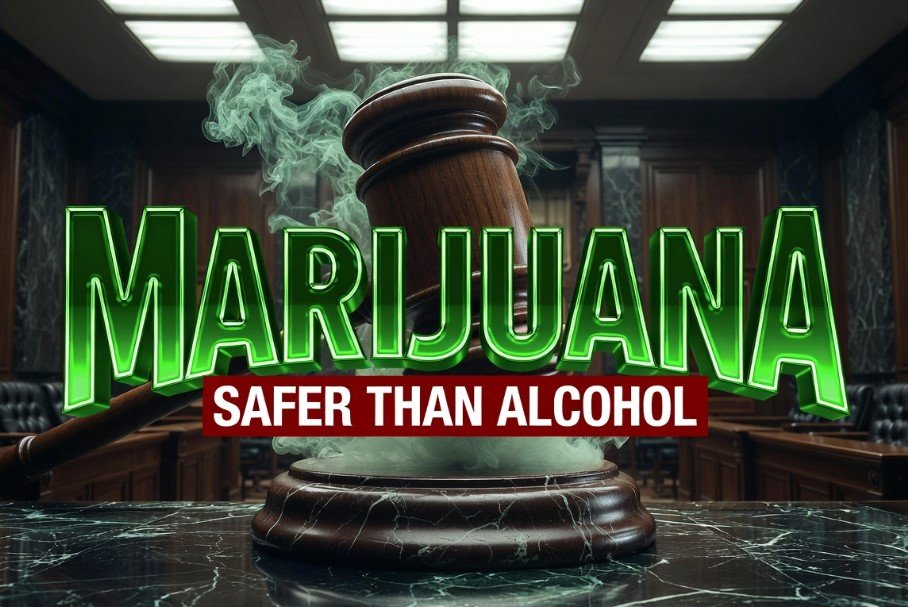
FDA Says Marijuana Harms Are Lower Than Alcohol and Opioids
Dominic Chiapperino, director of the controlled substance staff at the FDA’s Center for Drug Evaluation and Research, served as one of the two government witnesses called on day one.
Chiapperino testified that when the FDA compared marijuana directly to alcohol, opioids, and several other controlled substances, marijuana’s day-to-day harms came in lower across nearly every category they measured.
The FDA used a new two-part test for its scheduling analysis, one that rescheduling opponents have argued improperly departs from earlier methodology. Chiapperino pushed back, stating the new test is now applied “every time” a drug undergoes a formal scheduling review.
Here is a breakdown of what the FDA’s comparative analysis found:
- Marijuana is tied to significantly fewer overdose deaths than alcohol, opioids, and other Schedule I substances
- When cannabis appears in fatality case reports, deaths are typically caused by secondary events such as accidents or self-harm
- Marijuana’s overdose death potential is “much lower” than both other Schedule I drugs and Schedule II opioids
- Marijuana withdrawal symptoms mirror those of tobacco, primarily irritability
- Alcohol carries a far more severe withdrawal syndrome that can trigger seizures and even death
That last point is perhaps the most telling. Alcohol is freely sold across every state in America. Cannabis has been treated as more dangerous for half a century. The FDA’s own data now says that comparison was badly skewed from the start.
Rescheduling Opponents Call the Government’s Evidence “Surreal”
Kevin Sabet, president and CEO of Smart Approaches to Marijuana, was inside the hearing room as one of the designated participants. He did not hold back.
In a video posted to social media during a midday break, Sabet called the government’s case “surreal” and accused officials of “just lying through their teeth.” He charged the DEA with standing in a “super awkward position of arguing the opposite of what it’s been arguing for the last 50 years.”
Sabet has argued that today’s cannabis products are far more potent than earlier generations and carry rising risks of psychosis, addiction, and harm to developing brains. He also claimed that rescheduling serves primarily to benefit large cannabis corporations by unlocking billions in federal tax deductions.
The irony of the situation is hard to miss: the only parties the DEA invited to testify as designated participants are organizations that oppose rescheduling. Not one cannabis reform advocate, patient group, or industry representative was granted a seat at the table.
DEA Administrator Terrance Cole told reform supporters they do not meet the legal definition of an “interested person” because they are not “adversely affected” by the proposed rule. Before the hearing began, reform activists gathered outside DEA headquarters for a press conference, criticizing what they called a process that “shut out” the very people most affected by it.
The hearing is also not being livestreamed. Requests from a sitting U.S. congressman and multiple journalists to broadcast the proceedings publicly were denied.
What Comes Next and Why the Stakes Are Enormous
On Tuesday, the government’s second witness steps forward. Dr. Corey Burchman, a medical doctor from New Hampshire, will testify about his direct clinical experience transitioning pain patients from opioids to marijuana.
The DEA confirmed in pre-hearing filings that Burchman will “describe real-world impacts of treatment of pain with marijuana instead of opioids” and will compare the withdrawal and overdose risk profiles of both substances side by side.
The broader rescheduling process has already produced real change on the ground. Acting Attorney General Todd Blanche’s April 2026 order, issued under President Trump’s December 2025 executive order, immediately reclassified state-licensed medical cannabis to Schedule III, setting off a chain reaction across multiple federal agencies.
| Federal Agency | Impact of Rescheduling |
|---|---|
| IRS and Treasury | New 280E tax guidance announced; medical cannabis operators can now claim standard business deductions, ending effective tax rates that reached nearly 75% |
| ATF | Gun purchase form updated to acknowledge the federally legal status of medical marijuana |
| DEA | New registration process launched for state-licensed cannabis businesses to access federal benefits |
| Congressional Research Service | Confirmed that certified patients with state-dispensary marijuana now hold certain Schedule III protections under federal law |
| Dept. of Transportation | Issued guidance clarifying that medical cannabis is still no excuse for a positive drug test in safety-sensitive occupations |
The rescheduling has attracted serious legal opposition. Lawsuits filed by state attorneys general, SAM, and a cannabis-focused biopharmaceutical company have been consolidated before the U.S. Court of Appeals for the D.C. Circuit. A congressional committee also voted to block further rescheduling action, though bipartisan lawmakers say they do not expect that provision to become law.
More than 42,000 public comments were submitted on the original rescheduling proposal, making it one of the most heavily commented drug policy rulemakings in recent memory.
This hearing is more than a procedural step in federal rulemaking. It is the U.S. government publicly confronting 50 years of its own messaging on live record, with its own witnesses making the case that marijuana was never as dangerous as it was labeled. For the millions of Americans who rely on cannabis for chronic pain relief, for business owners crushed by tax rates that no other legal industry faces, and for the advocates who have spent decades pushing for this moment, Monday’s testimony carries enormous weight. The final ruling is still weeks away, but the government’s own words now live on the record. Drop your thoughts in the comments below and join the conversation on X using #MarijuanaRescheduling.

DOJ Slams Drug Testers Over Marijuana Rescheduling Fight

U.S. Feds Admit Marijuana Safer Than Alcohol at DEA Hearing

Republicans Fight Marijuana Tax Relief After Rescheduling

Tim Scott Urges Congress to Legalize Weed for Bank Access

Indiana Pushes for Marijuana Legalization with New Bill

DeltaBev Unveils the World’s Largest Cannabis Beverage Plant in LA

DeSantis Sidelines Pro-Marijuana Republican in CFO Appointment, Stirring Intra-Party Friction

Trump White House Rehires Outspoken Anti-Cannabis Doctor as Drug Policy Adviser

Michigan’s First Cannabis Consumption Lounge and Music Venue Set to Open Near Ypsilanti

Accel Network Pioneers Cannabis-Related Card Transactions
-
 CANNABIS3 years ago
DeltaBev Unveils the World’s Largest Cannabis Beverage Plant in LA
-
 NEWS2 years ago
Michigan’s First Cannabis Consumption Lounge and Music Venue Set to Open Near Ypsilanti
-
 NEWS2 years ago
Accel Network Pioneers Cannabis-Related Card Transactions
-
 NEWS1 year ago
DeSantis Sidelines Pro-Marijuana Republican in CFO Appointment, Stirring Intra-Party Friction
-
 NEWS1 year ago
Trump White House Rehires Outspoken Anti-Cannabis Doctor as Drug Policy Adviser
-
 NEWS4 months ago
Tim Scott Urges Congress to Legalize Weed for Bank Access
-

 NEWS2 years ago
Cann Group’s Strategic Boost: $15M Investment from New York Firm
-

 NEWS2 years ago
Unlicensed Cannabis Dispensary Shut Down in Northwest DC