
NEWS
Anthony Macherone Wrote the Methods Behind Cannabis Lab Tests
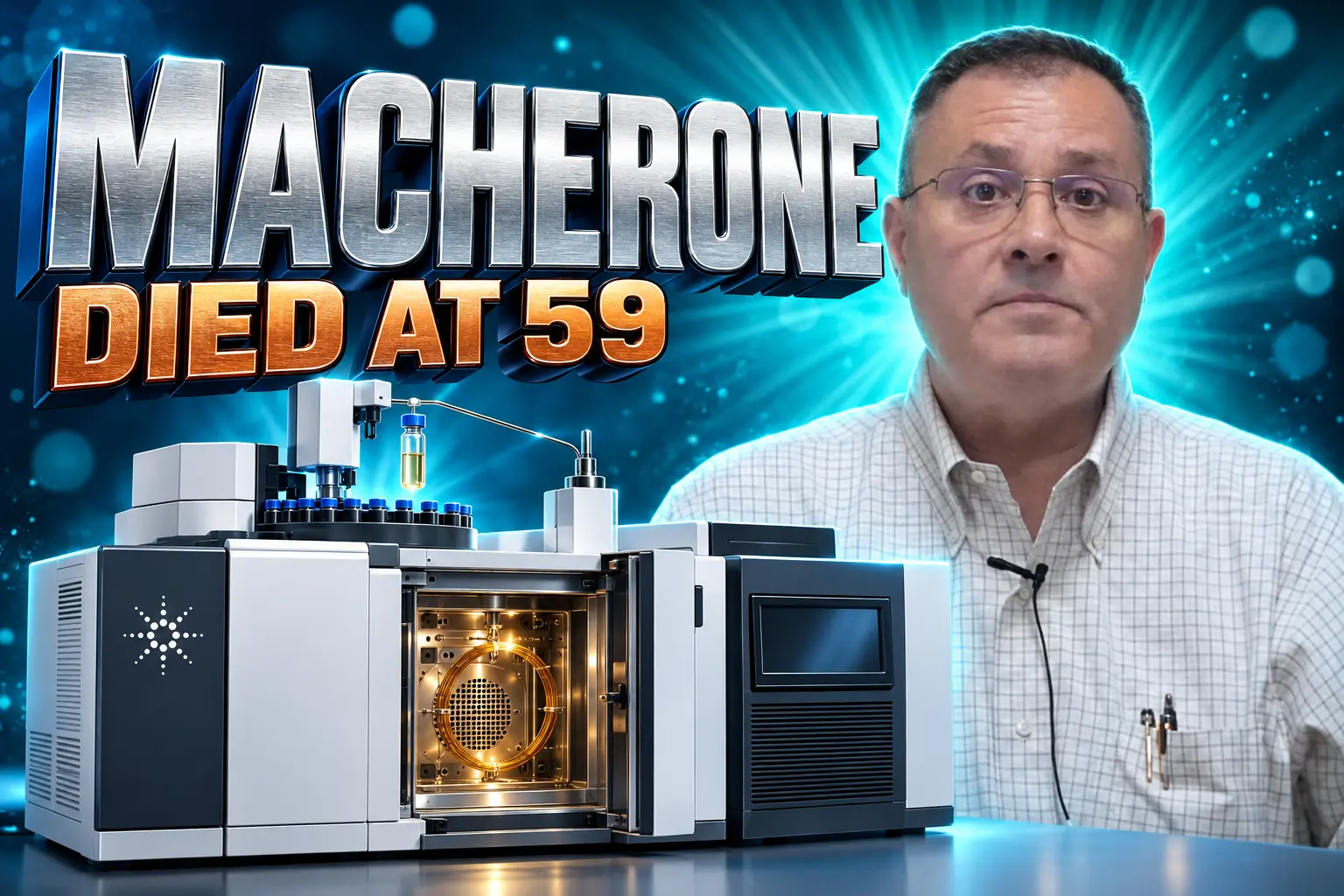
Agilent chemist Anthony Macherone died at 59 in 2024 after writing pesticide, solvent, and terpene methods that start-up cannabis labs copied.

Anthony Macherone, Agilent’s cannabis testing lead for more than six years, died on January 12, 2024, at 59. He lived in Elkton, Maryland, and worked in Wilmington, Delaware. The names on a dispensary jar belong to brands; the numbers on the lab certificate belong to chemists most buyers never hear of, and he was one of them.
Hicks Home for Funerals recorded Dr. Anthony Joseph Macherone Jr. as an analytical chemist for Agilent Technologies. A March 1, 2024 industry tribute called him a visiting professor at The Johns Hopkins University School of Medicine and a member of a cannabis science journal’s editorial advisory board. Cause of death was not given.
Anthony Macherone Died in Elkton at 59
He did not run a dispensary, a grow, or a state lab. He ran method work at an instrument company, which is where a lot of cannabis quality control actually gets written. For more than six years he led an Agilent team that built, shipped, and supported tests for cannabis and hemp products, according to the author bio on his last methods paper. That bio listed him as Strategic Technical Scientist and put his earlier craft in LC-MS and GC-MS for drug discovery, medicinal chemistry, metabolomics, and exposomics.
Conference agendas listed him as cannabis technical lead. A 2021 column billed him as strategic technical and content scientist and as a visiting professor at Johns Hopkins. The titles shifted; the job did not. He translated chromatography and mass spec into procedures a new testing lab could run.
MACHERONE’S CANNABIS TESTING TIMELINE
- June 2020: Joins a cannabis science journal’s editorial advisory board and publishes a 27-page chapter on cannabis and hemp testing in Elsevier’s Analysis of Cannabis volume.
- Fall 2022: Presents “LC-MS For Regulatory Testing: It’s About Time” at Cannabis Science Conference and sits on the meeting’s educational steering committee.
- January 5, 2024: A post promotes his paper with Jeffery S. Hollis on faster residual-solvent and terpene runs on one GC-MS system.
- January 12, 2024: Dies at 59 in Elkton, Maryland, seven days after that promotion.
- March 1, 2024: An industry tribute lists his methods papers from 2018 through early 2024 and calls him a generous mentor.
Public posts about him largely stopped after that tribute. The silence is ordinary for vendor chemists. Brands get the shelf; the people who wrote the peak tables do not.
The Chemists Who Write the Certificate of Analysis
A legal cannabis product in the United States is only as clean as the lab that signed it. Potency, pesticides, residual solvents, terpenes, heavy metals, and microbes all have to be measured, and the how is not a folk recipe. It is a chain of extraction, cleanup, columns, and detectors that a handful of application chemists at Agilent, and at rival instrument firms, spent the late 2010s turning into notes a start-up bench could copy.
Macherone’s name sat on that chain. His published cannabis and hemp papers cover the same menu a state certificate of analysis still carries. He did not invent cannabis testing. He did the unglamorous part of making it repeatable on hardware a new lab could buy.
TESTS HIS AGILENT TEAM PUT INTO METHOD NOTES
- Potency and profiling: Liquid chromatography with time-of-flight mass spec for cannabinoids in hemp oil extracts, published in 2018 as a speciation and quantitation method for research labs.
- Pesticides: A 2018 workflow that split a 200+ compound list across GC-MS/MS and LC-MS/MS so one extract could cover separate U.S. state target lists.
- Solvents and terpenes: Headspace GC-MS for residual solvents and liquid injection for terpenes on one bench, sped up in the January/February 2024 paper.
- Microbes: A 2019 review that paired extraction choices with quantitative PCR and compared that route with culture plates.
- Hemp and CBD goods: Untargeted GC-TOF work in 2019 on six CBD oil pet supplements, plus a 2020 derivatization review for cannabinoids in hempseed oil.
Buyers who want a federal primer on cannabis and cannabinoids still find health claims under study. Contaminant testing is the floor a lab can actually control, which is why those notes mattered more than another strain name on a jar.
A 200-Compound Pesticide List for Fragmented State Rules
Pesticide testing is where cannabis labs bleed time and money, because there is no single federal panel. Each legal state writes its own list. A lab that wants to serve more than one market has to hit the union of those lists, and some of those chemicals prefer a gas chromatograph while others prefer a liquid system.
A 2018 methods paper listed under his work described the practical answer his group used. The extract was acetonitrile. Cleanup was a solid-phase extraction cartridge plus targeted dispersive SPE. The dilute extract then went to both GC-MS/MS and LC-MS/MS.
Here we present a straightforward acetonitrile extraction using a solid-phase extraction (SPE) cartridge and targeted dispersive solid-phase extraction (dSPE) cleanup. The final dilute extract is analyzed with both gas chromatography-tandem mass spectrometry (GC-MS/MS) and liquid chromatography-tandem mass spectrometry (LC-MS/MS) for a comprehensive target list (200+ compounds) that encompasses those identified on individual U.S. state lists.
Anthony Macherone and coauthors, 2018 pesticide-residue methods paper
That 200+ figure is the load-bearing number. It is not a marketing round-up. It is the cost of fragmented rules: two expensive instruments, one extract, and a target list built to swallow whatever a state printer issued next. In 2019 he followed with a selectivity study on a model pesticide, using LC-QTOF, GC-QTOF, and GC-MS/MS on flower, because some compounds hide in cannabis resin if the lab picks the wrong ion path.
In September 2022 he was still on that fight. An interview billed as a call for more complete pesticide testing on consumer cannabis asked what should change in rules and guidelines. He did not live to see a single national panel. State menus remain the map labs have to follow.
One GC-MS Bench for Solvents and Terpenes
His last methods paper, written with Jeffery S. Hollis, a senior GC-MS applications chemist at Agilent, ran in the January/February 2024 issue (Volume 7, Issue 1, pages 26-28). Hollis is listed first. The job was blunt: residual solvents and terpenes on a single GC-MS, with no liner or column swap between the two assays, using helium as the carrier gas.
New versions were about 50% faster for solvents and 30% faster for terpenes than the group’s earlier notes. Terpenes went in by liquid injection. Solvents went in by headspace. Both used the same inlet. The paper said start-up labs that are not yet at full volume can run both assays on one box, then split the methods onto dedicated instruments later.
SOLVENTS VERSUS TERPENES ON ONE GC-MS
| Assay | How it is injected | Speed vs older notes | Where it is used |
|---|---|---|---|
| Residual solvents | Headspace | About 50% faster | Refined cannabis and hemp products |
| Terpenes | Liquid injection | About 30% faster | Biomass through lotions and other goods |
Hardware was an Intuvo 9000 gas chromatograph with mid-column backflush, a 7697A headspace sampler, and a 5977B mass selective detector. Two DB-Select 624 ultra inert columns, each 15 m x 0.25 mm with a 1.4 µm film, sat in the oven. The paper said accuracy, precision, range, linearity, and detection limits met or beat the 2020 Agilent notes it replaced (5994-2032EN for terpenes, 5994-1926EN for solvents).
This new, and novel analytical approach has already been successfully implemented in laboratories across North America.
Jeffery S. Hollis and Anthony Macherone, January/February 2024 methods paper
That sentence is the last claim he put on the industry’s bench. A post on January 5, 2024, promoted the paper. He died seven days later. The methods do not need the author in the room once a lab has verified them.
Johns Hopkins Work on the Exposome Came First
Cannabis was a late chapter. Before he was the person conference organizers called for potency and solvents, he worked the broader problem of what people carry in blood from the environment. Agilent listed him as visiting scientist at the Johns Hopkins University School of Medicine on a non-target environmental chemical screening note that used GC/Q-TOF to hunt emerging contaminants. A 2013 feature on the exposome, the sum of environmental exposures, quoted him in that visiting-scientist role as a senior applications chemist.
Exposome work and cannabis testing share a machine language. Both ask a chromatograph to pull a small signal out of a dirty matrix and put a number on it that someone will act on. Flower resin, hemp oil, and human plasma are different samples. The failure mode is the same: a method that looks fine on a clean standard and falls apart in the real stuff.
A 2020 paper under his name flagged one of those traps inside cannabis itself. Acid phytocannabinoids, the raw forms the plant actually makes, can misbehave in electrospray LC-MS depending on positive or negative mode, which is a quiet way to wreck a potency number if the lab is not watching. That is chemist talk for a consumer problem: the percentage on the label is only as honest as the ion path.
He Told Conference Labs LC-MS Was About Time
Cannabis Science Conference put him on its educational steering committee and gave him the Fall 2022 stage for “LC-MS For Regulatory Testing: It’s About Time.” The title was a poke at an industry that had leaned on HPLC-UV for potency because it was cheap and familiar, while tandem mass spec was the tool that could actually see pesticides and a longer cannabinoid list without pretending every peak was clean.
He also moderated a six-part podcast series, “a-Musings from the Cannabis Corner,” on testing and rules in the Americas and elsewhere. One installment walked through hiring for a cannabis testing lab. Another sat with colleagues on potency in cannabis, hemp, and cannabinoid products. A 2021 conversation turned to metals and ICP-MS, the instrument that reads lead, cadmium, arsenic, and mercury in oils and flower, because a pesticide method does not catch a dirty nutrient tank.
The 2019 microbial paper belongs in that same practical pile. Culture plates are slow and can miss organisms that do not grow well on the chosen agar. Quantitative PCR is fast and specific if the extraction is honest. Labs that moved Aspergillus and other pathogen screens onto molecular kits were making the same trade he wrote down: time-to-result versus a colony you can stare at.
What He Asked Labs to Fix Before He Died
The unfinished piece was pesticides. Dual-instrument lists of 200+ compounds were a workaround for state-by-state menus, not a finished standard. He spent 2022 saying consumer cannabis still needed broader pesticide testing, which is a polite way to say some legal products are screened for the chemicals a legislature remembered and not for the ones a grower can still buy.
Hemp and CBD goods sat inside that warning. His 2018 hemp-oil LC-TOF method and the 2019 GC-TOF look at six CBD pet supplements were not side projects. They were the same chemistry applied to the products a CBD shop actually sells, where “THC-free” and “clean” are marketing words unless a lab has a method that can see the opposite.
The January/February 2024 paper listed him in the past tense as Strategic Technical Scientist and said the dual solvent-terpene methods were already in North American labs. That is the last line he put on the bench, and it does not need a sequel.
Frequently Asked Questions
When did Anthony Macherone die?
Friday, January 12, 2024, at age 59, in Elkton, Maryland. Hicks Home for Funerals listed him as Anthony Joseph Macherone Jr. and as an analytical chemist for Agilent Technologies in Wilmington, Delaware; the funeral home sits at 103 West Stockton Street in Elkton.
What job titles did he hold at Agilent and Johns Hopkins?
The 2024 author bio used Strategic Technical Scientist. Conference materials used Sr. Scientist, Cannabis Technical Lead, and Visiting Professor at the Johns Hopkins University School of Medicine, while a 2013 exposome feature used senior applications chemist and visiting scientist at the same school.
How did his last paper run residual solvents and terpenes together?
Terpenes were injected as liquids and solvents were injected by headspace, both through one GC inlet on an Intuvo 9000 with a 7697A sampler and a 5977B detector, using helium and two 15 m DB-Select 624 columns so liners and columns did not have to be swapped between assays.
Why do cannabis pesticide methods use both GC-MS/MS and LC-MS/MS?
Some residues ionize and separate better in a gas system and others in a liquid system, so the 2018 workflow sent one acetonitrile extract to both detectors in order to cover a 200+ compound list built from separate U.S. state target menus rather than from a single federal panel.

The Justice Department Told Marijuana Testers They Lack Standing

The DEA Hearing Left Adult-Use Cannabis on Schedule I

Two Republicans Ask Treasury to Keep the Marijuana Tax Penalty

The Cannabis Banking Bill Sits Idle in Tim Scott’s Committee

Indiana’s Two-Ounce Marijuana Bill Died Without a Hearing

Vermont Stripped Psilocybin Legalization and Still Has No Therapy Program

Demecan’s €100 Million Round Was a Sales Bet

Cann Group’s $15 Million Obsidian Facility Ended in a Buyout

Identifying Cannabis Grow Houses: Key Signs to Watch For

White House Drug Office Puts Lev Back on Medical Policy
-
 CANNABIS2 years ago
Demecan’s €100 Million Round Was a Sales Bet
-
 LAW3 years ago
Vermont Stripped Psilocybin Legalization and Still Has No Therapy Program
-
 CANNABIS3 years ago
Cann Group’s $15 Million Obsidian Facility Ended in a Buyout
-
 LAW2 years ago
New Brunswick’s Cannabis Crackdown Stops at the Reserve Line
-
 MARIJUANA1 year ago
White House Drug Office Puts Lev Back on Medical Policy
-
 NEWS2 years ago
Identifying Cannabis Grow Houses: Key Signs to Watch For
-

 CANNABIS2 years ago
Ascend Wellness Kept Its 2024 Bosses and Lost Sales
-

 CANNABIS2 years ago
Pipeline’s Cannabis Concert Plan Is Still a 2025 Promise