
CANNABIS
Hermiston’s Second Cannabis Petition Misses the Ballot by 186
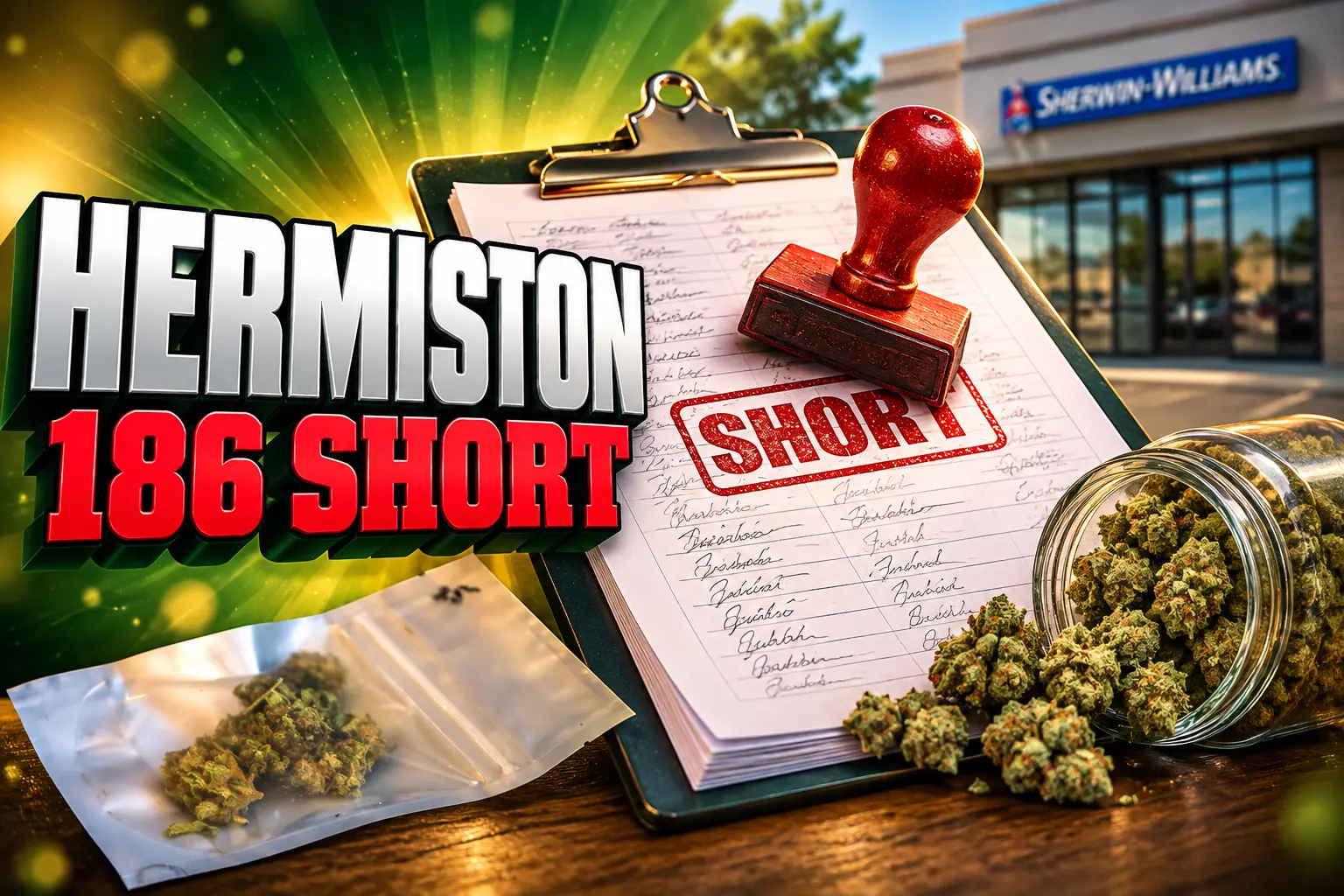
Hermiston’s 2026 cannabis petition validated 1,523 signatures, 186 short of 1,709, sending shops and tax to Pendleton until 2028.

Hermiston’s second try at a cannabis sales vote failed on July 2, 2026, after county elections staff validated 1,523 signatures, 186 short of the 1,709 required. Chief petitioner Jeremy Archie, a Portland operator who runs Treasure Valley Cannabis Co. in Ontario, had two years to fix a 2024 drive that produced only 896 valid names.
The measure will not appear on the November 3, 2026 ballot. The next citizen petition cannot be run until 2028, so the city’s ban on marijuana shops holds through another full election cycle while Hermiston shoppers keep driving to Pendleton and the Tri-Cities.
The 2026 Petition Missed by 186 Names
City elections official Lilly Alarcon-Strong emailed Archie on July 2 with the county tally. Of 2,895 signatures processed, 1,523 were accepted and 1,372 were rejected. That is 89.12% of the minimum, close enough to sting and still not a ballot line.
The prospective petition, received April 15, 2026, asked voters whether the city should allow marijuana retail facilities and a 3% tax on recreational sales. A yes would have repealed the 2016 voter ban for OLCC-licensed retail shops and sent the local tax to general city use. A no would have left every marijuana business barred.
Archie called the result a personal disappointment. He still described Hermiston, the largest city in eastern Oregon, with a 2025 population of 20,296, as a void on I-84 and a logistical crossroad. Aside from Pendleton, he said, other Oregon shops sit at least 100 miles away.
THE TWO PETITION COUNTS
| Drive | Processed | Valid | Required | Short by | Share of goal |
|---|---|---|---|---|---|
| 2024 | 2,370 | 896 | 1,614 | 718 | 55.51% |
| 2026 | 2,895 | 1,523 | 1,709 | 186 | 89.12% |
The 2026 crew collected more names and a higher share of valid ones, yet the threshold moved up with the voter rolls. Archie spent $25,000 on the first attempt; he did not publish a figure for the second.
School Boards and the Hospital Held the Line
The petition was Plan B after the Hermiston City Council refused to put shops on the 2024 ballot itself. On March 25, 2024, the council voted 7-1 to take no action, even after city surveys and a November 2023 budget town hall had shown support for taxing cannabis if sales were legal.
City Manager Byron Smith had told the council on February 26, 2024, that Pendleton had been generating about $400,000 a year from cannabis for the previous five years. The boards that spoke at the March meeting did not treat that as a reason to ask voters.
WHO TESTIFIED AGAINST A 2024 REFERRAL
- Hermiston School Board: Opposed a measure, citing harm to youth and public health.
- Umatilla School Board: Joined that opposition at the same hearing.
- Good Shepherd Health System Board: Warned against retail sales on health grounds.
- Good Shepherd Community Foundation Board: Stood with the hospital system against putting shops to a vote.
Councilor Doug Primmer, a former Oregon Department of Corrections officer and a Umatilla County reserve deputy, said the residents he talked to did not see cannabis shops as part of the city’s values, and he agreed. If voters ever passed a measure, he said he would carry out the work anyway. “I don’t have to like it, but I will do it,” he said.
Hermiston voters had already drawn that line on November 8, 2016. Measure 30-119, asking whether the city should prohibit sale, manufacture, warehousing, and distribution of marijuana in commercial zones, passed 54.4% to 45.6%. The council had moved a ban into place on November 23, 2015, after the legislature let cities in counties that voted against Measure 91 opt out of retail. Possession and home grow stayed legal statewide; storefronts did not.
Pendleton voters approved recreational shops the same night. Milton-Freewater kept its ban. Ten years later those two Umatilla County results still describe the map.
Pendleton Keeps the Shops and the Tax
Archie’s pitch is that Hermiston already has the customers. They just check out somewhere else. “There is tax revenue going up the road to Pendleton and across the border that Hermiston could benefit from,” he said after the 2026 count.
The amount of people who just accept it and go to Pendleton or Tri-Cities rather than trying to change things is wild. It’s really, really shocking.
Jeremy Archie, chief petitioner, after the July 2, 2026 tally
Pendleton now has four retail shops. On April 21, 2026, its council enacted a temporary moratorium on new marijuana retail licenses so staff could study a cap. The freeze did not touch existing stores or applications already on file. The city noted more than 4,000 people commute in for work, plus tourist traffic, and it wanted time to decide whether that inflow justifies a limit.
In June 2026 the same council allowed a pending store to keep moving after neighborhood appeals, including one from Kind Leaf Pendleton, an incumbent shop. Kind Leaf’s Erin Purchase had told the council that more stores do not create more customers, and that Idaho traffic faded after Ontario opened. Brandon Krenzler, who co-founded Kind Leaf and later sold his stake, had called Archie’s Hermiston plan a smart move in 2024 because so many people had talked about opening the city and then dropped it when they saw the cost.
Oregon charges a 17% state tax on recreational retail, and cities may add a local tax of up to 3 percent if voters approve it. Hermiston’s failed measure would have taken that 3%. Until a shop opens inside city limits, none of that local slice, and none of the state-shared retail tax that follows licensed premises, lands in Hermiston’s budget.
Why Archie Still Wants a Shop on I-84
Archie opened Treasure Valley Cannabis Co. in Ontario in October 2020 and later added farming, lab work, and wholesale in southern Oregon. Ontario sits on the Idaho line, where cannabis is still illegal, and the shop became one of the busiest rooms in the state on Boise-area traffic. He wants the same geometry in Hermiston, this time aimed at southeast Washington.
Washington legalized first, but Oregon lets customers see and smell flower in the jar. Washington requires prepackaged retail units. Washington also stacks a 37% cannabis excise tax on each retail sale on top of state and local sales tax. Archie cannot haul product across the Columbia; federal law still blocks that. He can put a counter on I-84 and wait for the cars.
In 2024 he said Hermiston is skipped and bypassed, and that people are forced to go to Pendleton. In 2026 he was still baffled that younger Hermiston residents treat a Tri-Cities run as a date night, dinner in Richland then a cannabis stop, while complaining about garbage fees and gas. The 2026 miss does not change that habit. It just leaves the register somewhere else for two more years.
Krenzler had warned that federal rescheduling talk would eventually bring larger chains, and that Hermiston might rather have a local shop than a national pharmacy brand. That argument never reached a ballot.
What the County Tossed From the Sheets
The 2024 failure was ugly on paper. Archie submitted 2,370 names and only 896 counted. Kim Lindell, then the Umatilla County elections director, said it was rare to see so many invalid signatures and that the petitioner did not do a good job of training circulators. Of the rejected 2024 names, 42.5% were not registered voters and 39.3% lived outside Hermiston, more than 80% of the discards in those two buckets alone.
Archie said his 2024 crew, young and eager, chased volume and did not check city limits. Signing events drew lines six or seven deep that still were not Hermiston voters. For 2026 he told gatherers to ask about registration, to look at identification, and to review the rules at the end of each day. People still signed with Irrigon addresses. Others gave five-digit house numbers that did not sit inside the city and then insisted they did.
The Umatilla County signature processing report, signed by Elections Manager Kim Lindell on July 2, 2026, shows the same two problems still ate the pile.
WHAT THE COUNTY REJECTED IN 2026
- Out of city: 528 names, 38.4% of all rejects, the largest single bucket.
- Not registered: 512 names, 37.3% of rejects.
- Signatures do not match: 109 names, 7.9% of rejects.
- Duplicates and a triplicate: 33 signed twice and one person signed three sheets.
- Underage: 10 signers were not old enough to petition.
Those out-of-city and unregistered totals are 75.8% of the 1,372 rejects. The city limit is tighter than the labor shed. People who work in Hermiston, shop there, and tell circulators they live there often live in Irrigon, Stanfield, or unincorporated Umatilla County, and those names never help a city measure. Archie also door-knocked and left hangers, and still could not find 186 more registered city voters in a short window.
Voters Are Locked Out Until 2028
Hermiston only takes citizen initiatives in even-numbered years. Archie cannot try again until 2028 unless the council reverses itself and refers a measure, which it has shown no sign of doing. “The idea that I have to wait another two years is maddening,” he said. In the meantime, he said, people drive through or around Hermiston to the Tri-Cities or Pendleton.
FROM MEASURE 91 TO A 2028 WAIT
- November 4, 2014: Oregon voters pass Measure 91, legalizing recreational cannabis statewide.
- July 1, 2015: Recreational sales begin under state license rules.
- November 23, 2015: Hermiston’s council puts a local sales ban in motion.
- November 8, 2016: Hermiston voters keep the ban, 54.4% to 45.6%; Pendleton voters approve shops.
- March 25, 2024: Council votes 7-1 against referring cannabis to the 2024 ballot after school and hospital boards object.
- June 2024: Archie’s first petition yields 896 valid names of 1,614 needed.
- July 2, 2026: The second petition yields 1,523 valid names of 1,709 needed, 186 short.
- November 3, 2026: The general election ballot carries a city charter amendment, not a cannabis question.
Pendleton is now managing a full retail map, not waiting for one. Hermiston is still the gap on I-84 that Archie called a green desert. The November 3, 2026 ballot will not ask residents whether that gap should close, and the clipboards stay in the box until 2028.
Frequently Asked Questions
What Would the 2026 Hermiston Cannabis Measure Have Asked?
The certified question was: “Shall the City of Hermiston allow marijuana retail facilities and collect a 3% tax on recreational marijuana retail sales?” The summary said a yes would let OLCC-licensed shops sell directly to consumers, set placement and operating rules, and put the 3% into general government, while a no would keep the ban on all marijuana-related businesses.
How Long Did Circulators Have to Gather Signatures?
Signature gathering opened May 22, 2026, and sheets had to reach the city recorder by 5:00 p.m. on June 15, 2026, a 25-day window for 1,709 valid city-voter names. No ballot-title appeal was filed, which is why collection started on that May date.
What City Code Bans Marijuana Shops in Hermiston?
Title XV, Chapter 157 of the Hermiston Municipal Code prohibits all marijuana-related businesses inside the city. The 2026 petition would have amended that chapter for retail only; manufacturing, warehousing, and other license types would have stayed out unless a later measure changed them.
Do Oregon Medical Cardholders Pay the Cannabis Sales Tax?
No. Patients with a valid Oregon Medical Marijuana Program card are exempt from the 17% state recreational tax and from a city’s 3% local add-on. Hermiston’s proposed 3% would have applied to recreational retail, not to qualifying medical sales.

The Justice Department Told Marijuana Testers They Lack Standing

The DEA Hearing Left Adult-Use Cannabis on Schedule I

Two Republicans Ask Treasury to Keep the Marijuana Tax Penalty

The Cannabis Banking Bill Sits Idle in Tim Scott’s Committee

Indiana’s Two-Ounce Marijuana Bill Died Without a Hearing

Vermont Stripped Psilocybin Legalization and Still Has No Therapy Program

Demecan’s €100 Million Round Was a Sales Bet

Cann Group’s $15 Million Obsidian Facility Ended in a Buyout

Identifying Cannabis Grow Houses: Key Signs to Watch For

White House Drug Office Puts Lev Back on Medical Policy
-
 LAW3 years ago
Vermont Stripped Psilocybin Legalization and Still Has No Therapy Program
-
 CANNABIS3 years ago
Cann Group’s $15 Million Obsidian Facility Ended in a Buyout
-
 CANNABIS2 years ago
Demecan’s €100 Million Round Was a Sales Bet
-
 NEWS2 years ago
Identifying Cannabis Grow Houses: Key Signs to Watch For
-
 LAW2 years ago
New Brunswick’s Cannabis Crackdown Stops at the Reserve Line
-
 MARIJUANA1 year ago
White House Drug Office Puts Lev Back on Medical Policy
-
 CANNABIS2 years ago
Ascend Wellness Kept Its 2024 Bosses and Lost Sales
-

 CANNABIS2 years ago
DC Padlocked Green Cloud, Then Licensed the Same Owner